
The Irreparable Loss of Female Virtue
Pride and PrejudiceThe novel confronts the harsh reality that a woman's reputation, once lost, can never be fully restored, a theme embodied by Lydia's elopement.
increasing Bearing strength in each event
 decreasing
Bearing strength in each eventdecreasingMary's Lecture on Virtue
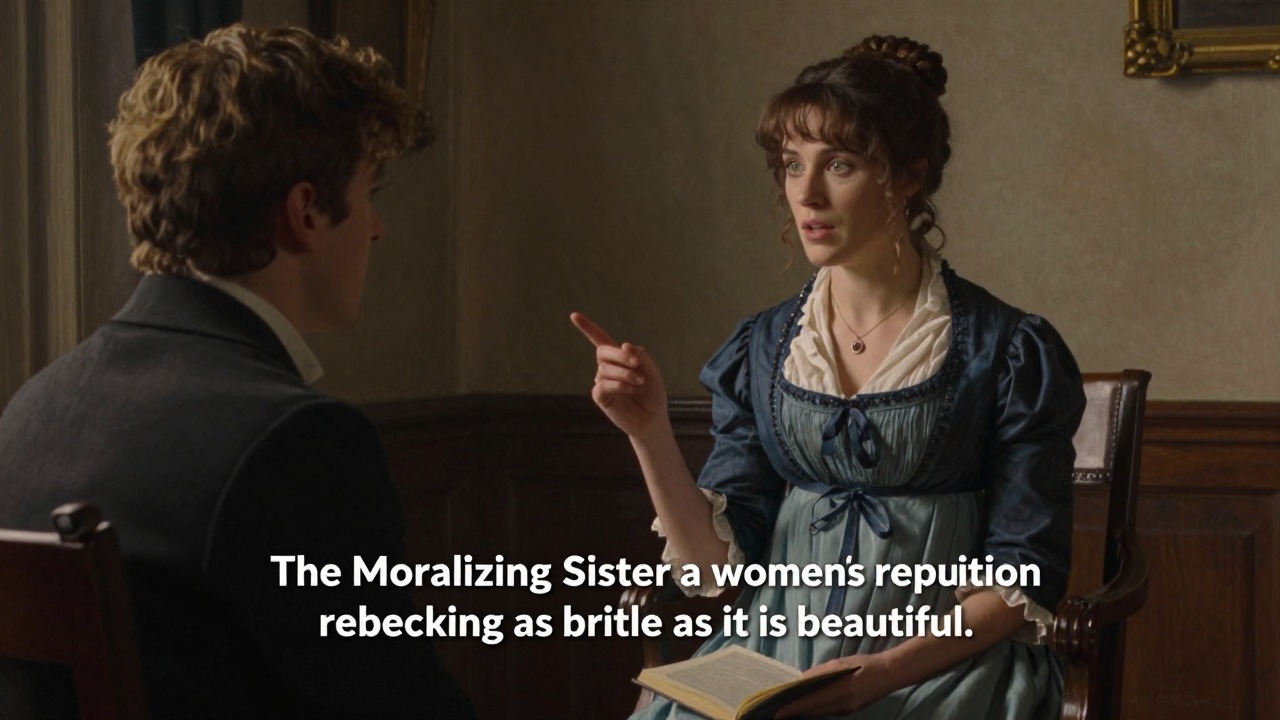
Mary's Lecture on Virtue
The Moralizing Sister
Mary Bennet, after Lydia's elopement, delivers a pompous speech about the loss of virtue being irretrievable. She quotes moral platitudes about a woman's reputation being as brittle as it is beautiful.
The Irony
Mary's speech is ironic because she is not a model of virtue herself, and her advice is useless. But the truth of her words is acknowledged by the novel: a woman's reputation is indeed fragile.
The Theme's Weight
The novel takes this theme seriously. Lydia's elopement is a crisis precisely because her reputation is ruined. The novel acknowledges the double standard but does not fully challenge it.
The Rescue of Reputation
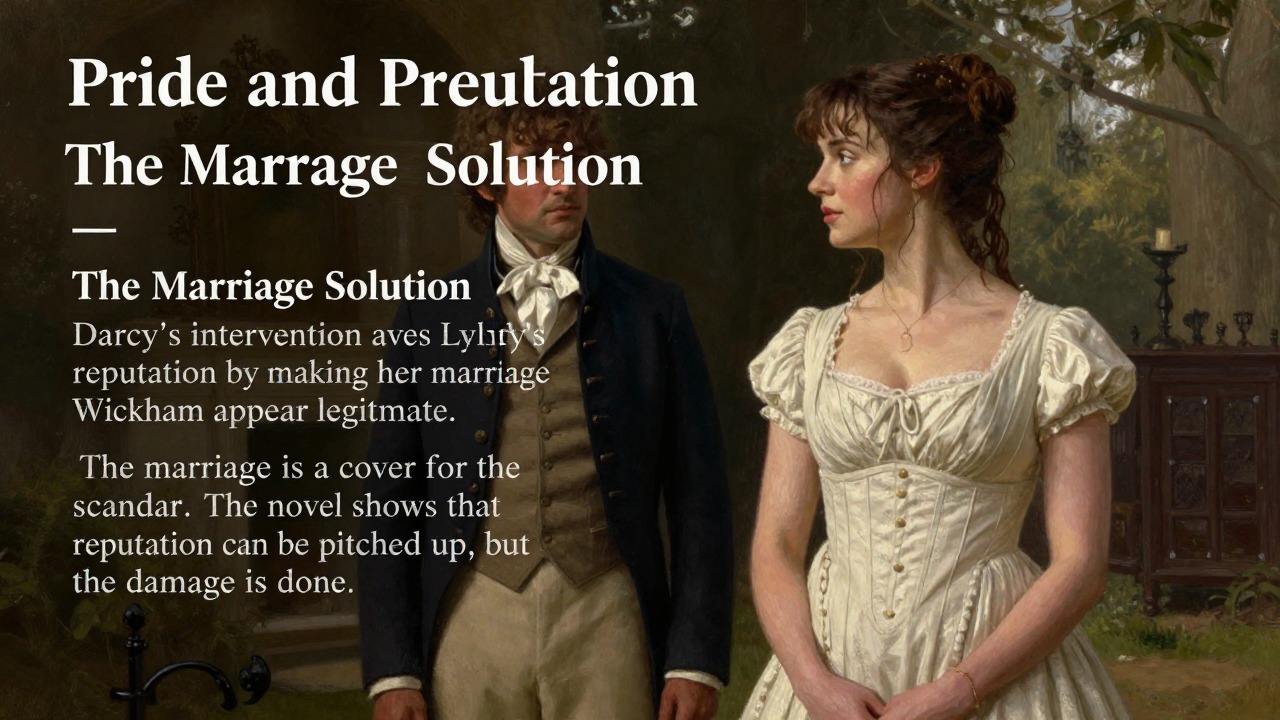
The Rescue of Reputation
The Marriage Solution
Darcy's intervention saves Lydia's reputation by making her marriage to Wickham appear legitimate. The marriage is a cover for the scandal. The novel shows that reputation can be patched up, but the damage is done.
The Lingering Stigma
Lydia is still looked down upon. She is sent away to the north, and she is never fully accepted by society. The stigma of her elopement remains.
The Theme's Punishment
Lydia's unhappy marriage is the punishment for her loss of virtue. The novel does not suggest that she can be fully redeemed. The theme is a cautionary one: a woman's reputation, once lost, is never fully recovered.
The Contrast with Elizabeth
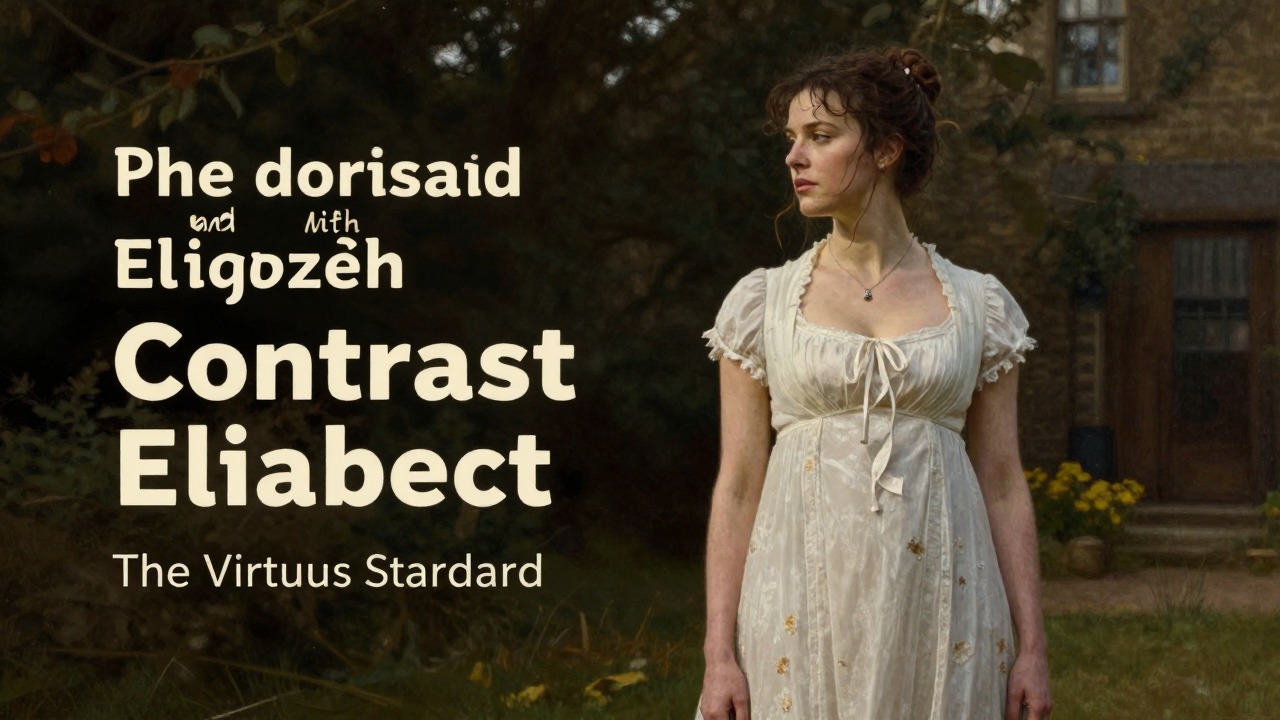
The Contrast with Elizabeth
The Virtuous Heroine
Elizabeth's virtue is never in question. She is careful to protect her reputation, though she is not afraid to walk three miles alone. The novel rewards her with a happy marriage.
The Double Standard
The novel implicitly critiques the double standard: Lydia is ruined, but Wickham continues his life. However, the novel does not explicitly challenge it. It accepts the reality of the time.
The Theme's Conclusion
The theme of female virtue is central to the plot. The novel suggests that while a loss of virtue is a tragedy, it is not the end of the story. Lydia is saved from total ruin, but her life is diminished. The theme adds depth to the social commentary.
After Lydia's elopement
When Darcy forces the marriage
Throughout the novel
